








ADAPT SERON study design:
Part A:
The main goal of this study was to see if VYVGART for IV infusion improved daily abilities in 119 patients with triple seronegative, anti-LRP4 antibody positive, or anti-MuSK antibody positive gMG.
Patients in this study needed to meet the following criteria:
- 18 years or older
- Triple seronegative, anti-LRP4 antibody positive, or anti-MuSK antibody positive gMG
- Myasthenia Gravis Foundation of America (MGFA) clinical classification class II to IV
- Myasthenia Gravis Activities of Daily Living (MG-ADL) score of 5 or more
- On a stable dose of their current oral gMG treatment prior to screening
The MG-ADL scale was used to measure gMG symptoms:
- The MG-ADL scale assesses the impact of gMG on daily functions by measuring 8 signs or symptoms that are commonly affected in gMG: the ability to speak, chew, swallow, breathe, brush teeth or comb hair, and get out of a chair, as well as the frequency of double vision and eyelid droop
- Each item is measured on a 4-point scale, where a score of 0 represents normal function and a score of 3 represents the loss of ability to perform that function. Total scores range from 0 to 24 points, with a lower score showing less severe gMG
Part B:
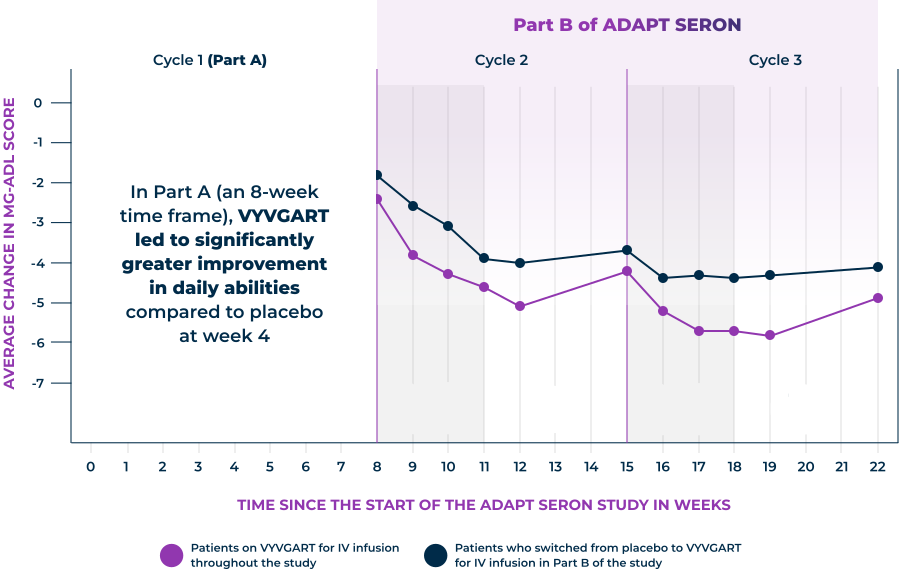
This was an open-label period to assess the long-term outcomes of VYVGART for IV infusion in adults with triple seronegative, anti-LRP4 antibody positive, or anti-MuSK antibody positive gMG. A goal of this study was to see how MG-ADL scores changed over time in 114 patients who continued to the long-term open-label period.





 Facebook
 Twitter
 Pinterest